
Tuesday, August 14, 2012
Another example of why to use Google’s Two-Factor Authentication

Saturday, August 11, 2012
NASA Mars Mission Uses Amazon’s AWS

NASA’s use of Amazon’s AWS is interesting. I knew that NASA had a private cloud so I didn’t expect them to use AWS. I’m guessing this is a good example of using the cloud to augment capability quickly when you don’t have enough (cloud bursting) and take advantage of services that are too costly to build yourself. NASA was able to quickly setup needed AWS EC2 services to prepare and serve images and then take advantage of Amazon’s huge network footprint to cache images on the edge of the net to serve images and other science data to a massive set of customers around the globe.
Cloud Vendor Expansion

After taking a much needed vacation I thought I would post an update to catch up on some notable events. Although Google has been in the cloud business as a “software as a service” (SaaS) provider with their office productivity apps, and a “platform as a service” (PaaS) provider with Google App Engine, they entered the infrastructure as a service (IaaS) field in June, firing a shot over the bow of Amazon, who for the most part is way ahead of everyone in experience and number of products. HP announced their cloud offering as did Oracle. All of the new entrants were at limited release status when they made these announcements.
Sunday, June 10, 2012
Evaluating Software as a Service

My example evaluation below will use a simple table in a spreadsheet. The table can contain as many columns as you have solution options. I’ll break up the evaluation into two sections, one for items that we can put a dollar figure on, one that will contain a rating with a possible multiplier. The multiplier services as a weighting mechanism where the higher the multiplier, the more important the feature or capability is. When using a rating (say 1 to 5), larger is better. I’ll draw from my earlier posts, “Benefits of Cloud Computing” and “Challenges and Risks of Cloud Computing” to help come up with the rating criteria.
Thursday, April 12, 2012
Silly Keyboard Review
Soft, supple and quiet my new keyboard is. I feel kind of silly doing a review of a keyboard but it is the main input interface on my computer and a tool of my craft. If I’m not reading, I’m typing. My quest has been to find the quietest keyboard that still has a really nice touch. I finally found it, the Logitech Illuminated Keyboard. So for those of you asking when they saw it, that’s what it is.
Friday, March 30, 2012
The Step Function of Cost

The focus needs to be on the architecture and the right-fitting enabling technology, including both private and public cloud technology, and not gratuitous opinions. There should be no limits on the technology solution patterns you can apply. If that means private, public, or a mix of both, that's fine as long as you do your requirements homework and can validate that you have chosen the right solution.
I agree, just stop architecting with brochure-ware and really think through your solution. Think about what you need today, where you are going and how you integrate everything else. Excluding software as a service (SaaS), when you compare private and public clouds there are some real advantages for a private cloud. One of the biggest advantages I see public cloud solutions have, is the flexibility to scale up and down and time it takes to do that.
The thing I keep coming back to when I talk to people about public vs. private clouds is what I call “large step functions in cost”. One of the big step functions is cost to build a data center or enlarge it. That large investments in infrastructure kills your ROI until you fully utilize that capital investment. If you are building (or enlarging) a data center for example, most companies don’t build just what they need today, they leave some room for growth, and that’s “flexibility”. That flexibility is costly because it just sits there on the books not really giving you any ROI until you start using it. Really the ROI from that flexibility is only realized as future cost avoidance of the next step function in cost. It’s like buying a restaurant and initially only serving breakfast. Sure you’ll eventually staff up and start getting better use of that capital investment when you start serving lunch and dinner but until you do, your ROI may be negative. Compare this to the cloud where having the capacity to grow costs you nothing. Is “public cloud” always the best solution? No, but you have options, architect, think, and compare.
- Chris Claborne
References & Related
Wednesday, March 7, 2012
Is The Cloud Prepping for Hockey Stick Growth?

(Updated 3/10/2012)
There are a number of significant things at play that may indicate the start of a hockey stick growth spurt in cloud computing. Some may think it’s just a price war but I don’t think so. In my last article I covered a number of changes that Amazon has made to their AWS offering. In just the last couple of weeks, Amazon has started lowering their prices on various components of their AWS portfolio including S3 which saw a 192% year over year growth in 2011, and EC2. This week, Google and Microsoft announced lower prices for storage. In addition to this, SalesForce.com recently announced pretty good first quarter results, highlighting two big wins, HP and Time Warner (Per ZD Net Article). It’s hard to tell but SalesForce.com may also be lowering prices a tad.
Tuesday, March 6, 2012
Rapid Expansion of Amazon's AWS

Sunday, February 26, 2012
iDrive Bulk Restore

Read my full review of iDrive and a couple of others to learn more.
- Chris Claborne
Tuesday, January 17, 2012
How to Get Started With Cloud Computing

Some IT departments want to utilize public cloud infrastructure as a service (IaaS), or Software as a Service (SaaS) but aren’t sure how to get started. I’ll discuss some ways to use cloud computing as you flesh out how you will use it and integrate into an existing information technology architecture. If you’re not sure what IaaS is, read my previous article, “Exploring Amazon’s Cloud IaaS & PaaS”.
Monday, December 19, 2011
Cloud in 2012? Start Planning Now
Thinking about utilizing cloud services in 2012 and want to start mitigating some potential risks today. InfoWorld’s Tim Greene recommends that you start working over you network provider today.
Is Zoho's CRM App Growing Up?

Zoho “software as a service” (SaaS) company has always impressed me. I use their Invoicing application and reviewed it last year. According to InfoWorld’s Chris Kanaracus, Zoho is gunning for SalesForce.com with their latest upgrade to their CRM application. Zoho is claiming they are making inroads into the CRM SaaS market that SalesForce.com is known for. I like the fresh approach they take to their applications, making them more inviting, easier to understand than their stodgy old school counterparts. Looking at the flashy new capabilities, mobile access, and continious improvement without the hassle of upgrades, I can't help but think they are the next big force in small business solutions via SaaS.
I think that in 2012, we will continue to see more fireworks in the SaaS and infrastructure as a service” (IaaS) cloud industry.
- Chris Claborne
- Chris Claborne
Tuesday, December 13, 2011
Using Amazon’s AWS

In my last article, “Exploring Amazon’s Cloud IaaS & PaaS”, I introduced Amazon Web Services (AWS), and I used AWS to describe the terms “Infrastructure as a Service” (IaaS), and “Platform as a Service” (PaaS). In order to better understand the value of AWS, I deployed a real world application. In this article, I’ll step through how I deployed and scaled my example application on AWS and comment on where I found the greatest value to be. If you haven’t read my first AWS article, “Exploring Amazon’s Cloud IaaS & PaaS”, I suggest you read it as an introduction to AWS.

Gartner Has First Ever IaaS Magic Quadrant Report

- A new Gartner Magic Quadrant report is available this week covering the public cloud computing vendors. Not surprisingly, AWS received top honors, although Terremark, Savvis and CSC were also praised. Bluelock, a smaller vendor, also got props. The report is very detailed in the usual Gartner manner and is a must-read for enterprise IT architects who are evaluating players in this space.
Friday, December 9, 2011
Exploring Amazon's Cloud IaaS & PaaS
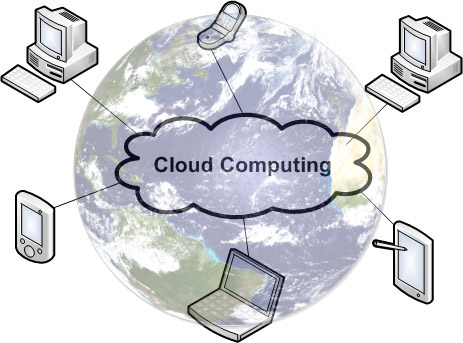
AWS is used by many large Internet companies like active.com, Ericsson, the guardian news, Yelp, IMDB and others to deliver their web applications or services. Although I’ve covered Software as a Service” and related benefits, risks, and some specific applications, this article will take the next big step into another side of cloud computing, using public scalable infrastructure to deploy your in-house applications.
Subscribe to:
Posts (Atom)